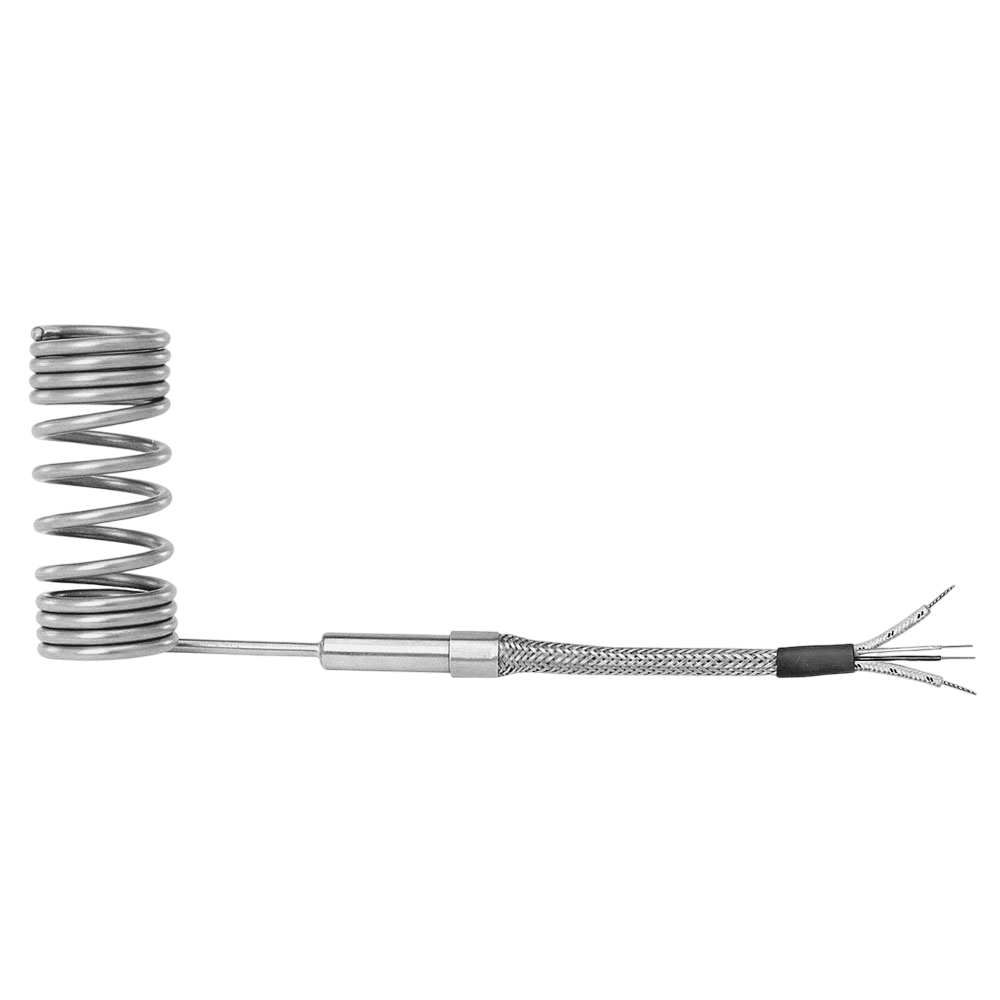
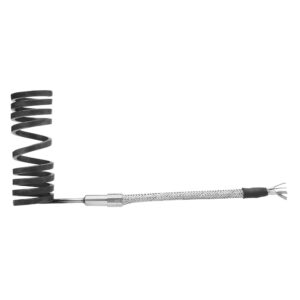
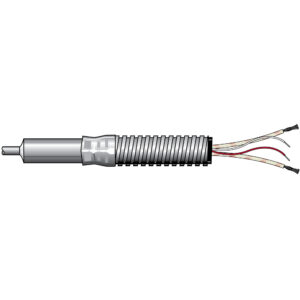
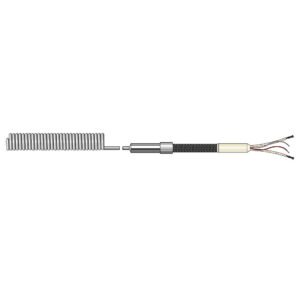
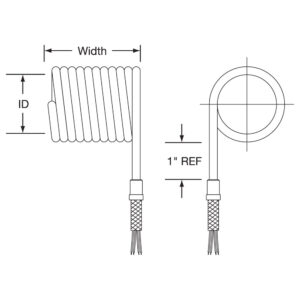
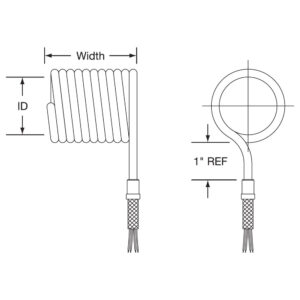
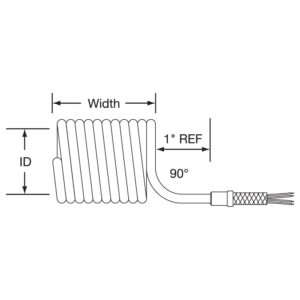
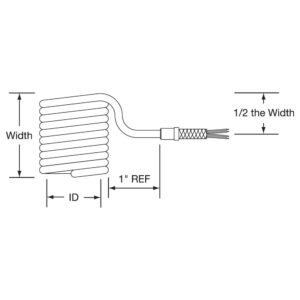
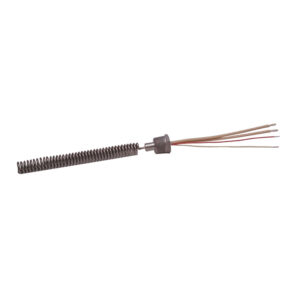
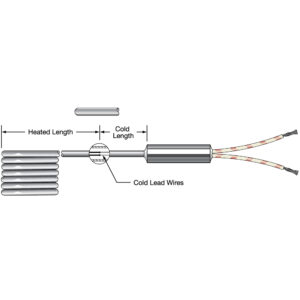
The heating source for the Mightyband heater is a resistance wire in straight form or wound into a miniature helical coil. The swaging and drawing process involved in manufacturing the heater cable for Mightyband heaters compacts the ceramic insulators that house the heating element and thermocouple wire into a solid mass, producing a rugged and durable heater cable, providing excellent thermal conductivity and dielectric strength and quick thermocouple response.
Heating element is embedded in MgO insulation inside a round tube.
📦
Square Cable
Heating element is embedded in MgO insulation inside a square tube. Because of the flat surface, in some applications square cable allows better heat conduction and a faster start-up time.
Heating element is embedded in MgO insulation inside a square tube. Because of the flat surface, in some applications square cable allows better heat conduction and a faster start-up time.
📦
Rectangular Cable
Heating element is embedded in MgO insulation inside a square tube. Because of the flat surface, in some applications rectangular cable allows better heat conduction and a faster start-up time.
Heating element is embedded in MgO insulation inside a square tube. Because of the flat surface, in some applications rectangular cable allows better heat conduction and a faster start-up time.
Standard Configurations
No options available for this section based on your selections
Clamping Straps
Mightybands normally do not require clamping straps as the inside diameter of the coil is wound undersize for a screw fit. At times because of differences in the expansion and contraction in materials a clamping strap may be required to ensure circumferential clamping forces. Clamping straps also provide additional protection of the heater coils from accidental damage. If optional clamping strap is required, specify.
Mightybands normally do not require clamping straps as the inside diameter of the coil is wound undersize for a screw fit. At times because of differences in the expansion and contraction in materials a clamping strap may be required to ensure circumferential clamping forces. Clamping straps also provide additional protection of the heater coils from accidental damage. If optional clamping strap is required, specify.
By specifically arranging a coiling pattern on the heater cable, heat distribution can be concentrated where it is needed. Useful to compensate for heat losses along the edges of the part being heated. Specify concentration.
By specifically arranging a coiling pattern on the heater cable, heat distribution can be concentrated where it is needed. Useful to compensate for heat losses along the edges of the part being heated. Specify concentration.
Electrical Terminations
No options available for this section based on your selections
Type A: Stainless Steel Armor Cable
Type A1 – Rated to 482°F (250°C) – TGGT Fiberglass Wire
Type A2 – Rated to 450°F (232°C) – Teflon® Wire
Type A3 – Rated to 842°F (450°C) – MGT Fiberglass Wire Flexible SS armor cable protects the leads against abrasion and contamination. Special plugs can be attached to heater leads and thermocouple leads.
Type A1 – Rated to 482°F (250°C) – TGGT Fiberglass Wire
Type A2 – Rated to 450°F (232°C) – Teflon® Wire
Type A3 – Rated to 842°F (450°C) – MGT Fiberglass Wire Flexible SS armor cable protects the leads against abrasion and contamination. Special plugs can be attached to heater leads and thermocouple leads.
• The heating element wire to lead wire transition is done within the potting adapter. Potting adapter sizes are 5/16″ O.D. × 1-1/2″ long for heater cable diameters 0.188″ and smaller and 1/2″ × 1-1/2″ long for diameters above 0.188″. Other diameters and lengths are available, depending on design parameters.
• When the 1/2″ × 1-1/2″ long potting adapter is used for high temperature applications, a special heat sink collar is also used to help keep the transition from overheating.
• All transitions use 1150°F (621°C) braze joint between the heating element wire and the flexible lead wire.
• Normally the lead wire construction is a fiberglass braided insulation rated to 482°F (250°C). For high temperature applications an MGT (mica, fiberglass, Teflon® impregnation) insulation rated to 842°F (450°C) is used. All thermocouple leads use a fiberglass insulation rated to 900°F (482°C). Lead wires are selected to meet the amperage and temperature requirements of each specific heater.
Type B: Stainless Steel Overbraid
Type B1 – Rated to 482°F (250°C) – TGGT Fiberlgass Wire
Type B2 – Rated to 450°F (232°C) – Teflon® Wire
Type B3 – Rated to 842°F (450°C) – MGT Fiberlgass Wire SS overbraid protects the leads against abrasion and allows more aggressive bending, which is not possible with armor cable. Special plugs can be attached to heater and thermocouple leads.
Type B1 – Rated to 482°F (250°C) – TGGT Fiberlgass Wire
Type B2 – Rated to 450°F (232°C) – Teflon® Wire
Type B3 – Rated to 842°F (450°C) – MGT Fiberlgass Wire SS overbraid protects the leads against abrasion and allows more aggressive bending, which is not possible with armor cable. Special plugs can be attached to heater and thermocouple leads.
• The heating element wire to lead wire transition is done within the potting adapter. Potting adapter sizes are 5/16″ O.D. × 1-1/2″ long for heater cable diameters 0.188″ and smaller and 1/2″ × 1-1/2″ long for diameters above 0.188″. Other diameters and lengths are available, depending on design parameters.
• When the 1/2″ × 1-1/2″ long potting adapter is used for high temperature applications, a special heat sink collar is also used to help keep the transition from overheating.
• All transitions use 1150°F (621°C) braze joint between the heating element wire and the flexible lead wire.
• Normally the lead wire construction is a fiberglass braided insulation rated to 482°F (250°C). For high temperature applications an MGT (mica, fiberglass, Teflon® impregnation) insulation rated to 842°F (450°C) is used. All thermocouple leads use a fiberglass insulation rated to 900°F (482°C). Lead wires are selected to meet the amperage and temperature requirements of each specific heater.
Type C: Galvanized Armor Cable
Type C1 – Rated to 482°F (250°C) – TGGT Fiberlgass Wire
Type C2 – Rated to 450°F (232°C) – Teflon® Wire
Type C3 – Rated to 842°F (450°C) – MGT Fiberglass Wire Flexible galvanized armor cable protects the leads against abrasion and contamination. Special plugs can be attached to heater leads and thermocouple leads.
Type C1 – Rated to 482°F (250°C) – TGGT Fiberlgass Wire
Type C2 – Rated to 450°F (232°C) – Teflon® Wire
Type C3 – Rated to 842°F (450°C) – MGT Fiberglass Wire Flexible galvanized armor cable protects the leads against abrasion and contamination. Special plugs can be attached to heater leads and thermocouple leads.
• The heating element wire to lead wire transition is done within the potting adapter. Potting adapter sizes are 5/16″ O.D. × 1-1/2″ long for heater cable diameters 0.188″ and smaller and 1/2″ × 1-1/2″ long for diameters above 0.188″. Other diameters and lengths are available, depending on design parameters.
• When the 1/2″ × 1-1/2″ long potting adapter is used for high temperature applications, a special heat sink collar is also used to help keep the transition from overheating.
• All transitions use 1150°F (621°C) braze joint between the heating element wire and the flexible lead wire.
• Normally the lead wire construction is a fiberglass braided insulation rated to 482°F (250°C). For high temperature applications an MGT (mica, fiberglass, Teflon® impregnation) insulation rated to 842°F (450°C) is used. All thermocouple leads use a fiberglass insulation rated to 900°F (482°C). Lead wires are selected to meet the amperage and temperature requirements of each specific heater.
Type M: Plain Leads
Standard
M1 – High temperature cement potting with TGGT (Teflon® tape, fiberglass, Teflon® treated fiberglass overbraid) insulated lead wire for 482°F (250°C) and silicone sealed is standard.
Optional
M2 – High temperature epoxy potting rated 450°F (232°C) with PTFE Teflon® lead wire for a better moisture seal.
M3 – High temperature cement potting with MGT (mica tape, Teflon® treated fiberglass overbraid) insulated lead wire for 842°F (450°C) and silicone sealed.
M1 – High temperature cement potting with TGGT (Teflon® tape, fiberglass, Teflon® treated fiberglass overbraid) insulated lead wire for 482°F (250°C) and silicone sealed is standard.
Optional
M2 – High temperature epoxy potting rated 450°F (232°C) with PTFE Teflon® lead wire for a better moisture seal.
M3 – High temperature cement potting with MGT (mica tape, Teflon® treated fiberglass overbraid) insulated lead wire for 842°F (450°C) and silicone sealed.
The heating element wire to lead wire transition is done within the potting adapter. Potting adapter sizes are 5/16″ O.D. × 1-1/2″ long for heater cable diameters 0.188″ and smaller and 1/2″ × 1-1/2″ long for diameters above 0.188″. Other diameters and lengths are available, depending on design parameters.
When the 1/2″ × 1-1/2″ long potting adapter is used for high temperature applications, a special heat sink collar is also used to help keep the transition from overheating.
All transitions use 1150°F (621°C) braze joint between the heating element wire and the flexible lead wire.
Normally the lead wire construction is a fiberglass braided insulation rated to 482°F (250°C). For high temperature applications an MGT (mica, fiberglass, Teflon® impregnation) insulation rated to 842°F (450°C) is used. All thermocouple leads use a fiberglass insulation rated to 900°F (482°C). Lead wires are selected to meet the amperage and temperature requirements of each specific heater.
Temperature at potting adapter should not exceed the specified limits.
Type S: Fiberglass Sleeve
Type S1 – Rated to 482°F (250°C) – TGGT Fiberglass Wire
Type S2 – Rated to 450°F (232°C) – Teflon® Wire
Type S3 – Rated to 842°F (450°C) – MGT Fiberglass Wire Fiberglass sleeve protects the leads against abrasion and allows more flexibility of lead wires. Special plugs can be attached to heater and thermocouple leads.
Type S1 – Rated to 482°F (250°C) – TGGT Fiberglass Wire
Type S2 – Rated to 450°F (232°C) – Teflon® Wire
Type S3 – Rated to 842°F (450°C) – MGT Fiberglass Wire Fiberglass sleeve protects the leads against abrasion and allows more flexibility of lead wires. Special plugs can be attached to heater and thermocouple leads.
• The heating element wire to lead wire transition is done within the potting adapter. Potting adapter sizes are 5/16″ O.D. × 1-1/2″ long for heater cable diameters 0.188″ and smaller and 1/2″ × 1-1/2″ long for diameters above 0.188″. Other diameters and lengths are available, depending on design parameters.
• When the 1/2″ × 1-1/2″ long potting adapter is used for high temperature applications, a special heat sink collar is also used to help keep the transition from overheating.
• All transitions use 1150°F (621°C) braze joint between the heating element wire and the flexible lead wire.
• Normally the lead wire construction is a fiberglass braided insulation rated to 482°F (250°C). For high temperature applications an MGT (mica, fiberglass, Teflon® impregnation) insulation rated to 842°F (450°C) is used. All thermocouple leads use a fiberglass insulation rated to 900°F (482°C). Lead wires are selected to meet the amperage and temperature requirements of each specific heater.
Lead Orientations
No options available for this section based on your selections
No options available for this section based on your selections
Explosion or Moisture Resistant Box
Mightyband coil heaters can be used for immersion heating and/or in-line heating of liquids, gases or air. The built-in thermocouple provides a self-contained heating unit, eliminating the need for separate thermowells, and is available with standard NPT or special fittings. The outside diameter (O.D.) of the coil must be smaller than the fitting being used for proper fit to the mating part. The wiring can be protected from hazardous environments by attaching explosion or moisture-proof boxes. Consult Tempco with your requirements.
Mightyband coil heaters can be used for immersion heating and/or in-line heating of liquids, gases or air. The built-in thermocouple provides a self-contained heating unit, eliminating the need for separate thermowells, and is available with standard NPT or special fittings. The outside diameter (O.D.) of the coil must be smaller than the fitting being used for proper fit to the mating part. The wiring can be protected from hazardous environments by attaching explosion or moisture-proof boxes. Consult Tempco with your requirements.
NPT Pipe Fittings
Mightyband coil heaters can be used for immersion heating and/or in-line heating of liquids, gases or air. The built-in thermocouple provides a self-contained heating unit, eliminating the need for separate thermowells. Available with standard NPT fittings or special fittings. The outside diameter (O.D.) of the coil must be smaller than the fitting being used for proper fit to the mating part. Consult Tempco with your requirements.
Mightyband coil heaters can be used for immersion heating and/or in-line heating of liquids, gases or air. The built-in thermocouple provides a self-contained heating unit, eliminating the need for separate thermowells. Available with standard NPT fittings or special fittings. The outside diameter (O.D.) of the coil must be smaller than the fitting being used for proper fit to the mating part. Consult Tempco with your requirements.
Star Wound Coil
Star wound formations are usually inserted into pipes or ducts and are used to heat moving air or liquids. The offset coils create a turbulent flow. This allows the flowing material to have better contact with the heater surface, resulting in more efficient heat transfer.
Star wound formations are usually inserted into pipes or ducts and are used to heat moving air or liquids. The offset coils create a turbulent flow. This allows the flowing material to have better contact with the heater surface, resulting in more efficient heat transfer.
Type ND – Neck Down
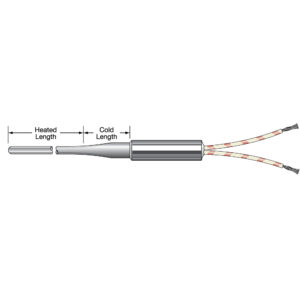
The availability of heaters with optional cold heater cable end depends on the electrical ratings and materials used for each heater design. Consult Tempco for the availability of these options.
The availability of heaters with optional cold heater cable end depends on the electrical ratings and materials used for each heater design. Consult Tempco for the availability of these options.
Type NW – Built-In Cold Wire
The availability of heaters with optional cold heater cable end depends on the electrical ratings and materials used for each heater design. Consult Tempco for the availability of these options.
The availability of heaters with optional cold heater cable end depends on the electrical ratings and materials used for each heater design. Consult Tempco for the availability of these options.
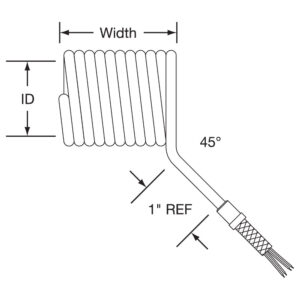
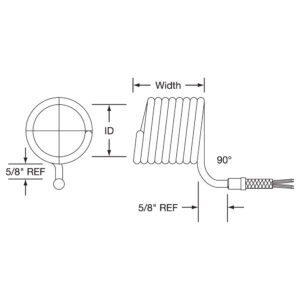
Type S: Fiberglass Sleeve Type S1 – Rated to 482°F (250°C) – TGGT Fiberglass Wire Type S2 – Rated to 450°F (232°C) – Teflon® Wire Type S3 – Rated to 842°F (450°C) – MGT Fiberglass Wire Fiberglass sleeve protects the leads against abrasion and allows more flexibility of lead wires. Special plugs can be attached to heater and thermocouple leads. • The heating element wire to lead wire transition is done within the potting adapter. Potting adapter sizes are 5/16″ O.D. × 1-1/2″ long for heater cable diameters 0.188″ and smaller and 1/2″ × 1-1/2″ long for diameters above 0.188″. Other diameters and lengths are available, depending on design parameters. • When the 1/2″ × 1-1/2″ long potting adapter is used for high temperature applications, a special heat sink collar is also used to help keep the transition from overheating. • All transitions use 1150°F (621°C) braze joint between the heating element wire and the flexible lead wire. • Normally the lead wire construction is a fiberglass braided insulation rated to 482°F (250°C). For high temperature applications an MGT (mica, fiberglass, Teflon® impregnation) insulation rated to 842°F (450°C) is used. All thermocouple leads use a fiberglass insulation rated to 900°F (482°C). Lead wires are selected to meet the amperage and temperature requirements of each specific heater. Electrical Terminations 45° to coil 90° to coil Additional Options Cable Type Clamping Options Coil Configurations Cold End Options J K Lead Orientations Lead Wire (w/ & w/out protection) None Parallel to coil Round Special Heater Configurations Square/Rectangular Standard Configurations Thermocouple Calibration Type NW – Built-In Cold Wire The availability of heaters with optional cold heater cable end depends on the electrical ratings and materials used for each heater design. Consult Tempco for the availability of these options. Armor Cable Wire Braids Type ND – Neck Down Type M: Plain Leads Standard M1 – High temperature cement potting with TGGT (Teflon® tape, fiberglass, Teflon® treated fiberglass overbraid) insulated lead wire for 482°F (250°C) and silicone sealed is standard. Optional M2 – High temperature epoxy potting rated 450°F (232°C) with PTFE Teflon® lead wire for a better moisture seal. M3 – High temperature cement potting with MGT (mica tape, Teflon® treated fiberglass overbraid) insulated lead wire for 842°F (450°C) and silicone sealed. The heating element wire to lead wire transition is done within the potting adapter. Potting adapter sizes are 5/16″ O.D. × 1-1/2″ long for heater cable diameters 0.188″ and smaller and 1/2″ × 1-1/2″ long for diameters above 0.188″. Other diameters and lengths are available, depending on design parameters. When the 1/2″ × 1-1/2″ long potting adapter is used for high temperature applications, a special heat sink collar is also used to help keep the transition from overheating. All transitions use 1150°F (621°C) braze joint between the heating element wire and the flexible lead wire. Normally the lead wire construction is a fiberglass braided insulation rated to 482°F (250°C). For high temperature applications an MGT (mica, fiberglass, Teflon® impregnation) insulation rated to 842°F (450°C) is used. All thermocouple leads use a fiberglass insulation rated to 900°F (482°C). Lead wires are selected to meet the amperage and temperature requirements of each specific heater. Temperature at potting adapter should not exceed the specified limits. Type LO6 90º to Coil centerline (LO6) Type LO5 45º to Coil (LO5) Type LO4 Parallel to coil centerline of width (LO4) Type LO3 90º to Coil (LO3) Type LO2 Parallel to coil centerline (LO2) Type LO1 Standard: Parallel to Coil (LO1) Type K Built-In Type K Thermocouple Type J Built-In Type J Thermocouple Type C: Galvanized Armor Cable Type C1 – Rated to 482°F (250°C) – TGGT Fiberlgass Wire Type C2 – Rated to 450°F (232°C) – Teflon® Wire Type C3 – Rated to 842°F (450°C) – MGT Fiberglass Wire Flexible galvanized armor cable protects the leads against abrasion and contamination. Special plugs can be attached to heater leads and thermocouple leads. Type B: Stainless Steel Overbraid Type B1 – Rated to 482°F (250°C) – TGGT Fiberlgass Wire Type B2 – Rated to 450°F (232°C) – Teflon® Wire Type B3 – Rated to 842°F (450°C) – MGT Fiberlgass Wire SS overbraid protects the leads against abrasion and allows more aggressive bending, which is not possible with armor cable. Special plugs can be attached to heater and thermocouple leads. Type A: Stainless Steel Armor Cable Type A1 – Rated to 482°F (250°C) – TGGT Fiberglass Wire Type A2 – Rated to 450°F (232°C) – Teflon® Wire Type A3 – Rated to 842°F (450°C) – MGT Fiberglass Wire Flexible SS armor cable protects the leads against abrasion and contamination. Special plugs can be attached to heater leads and thermocouple leads. Star Wound Coil Star wound formations are usually inserted into pipes or ducts and are used to heat moving air or liquids. The offset coils create a turbulent flow. This allows the flowing material to have better contact with the heater surface, resulting in more efficient heat transfer. Square Cable Heating element is embedded in MgO insulation inside a square tube. Because of the flat surface, in some applications square cable allows better heat conduction and a faster start-up time. Round Cable Heating element is embedded in MgO insulation inside a round tube. Rectangular Cable Heating element is embedded in MgO insulation inside a square tube. Because of the flat surface, in some applications rectangular cable allows better heat conduction and a faster start-up time. NPT Pipe Fittings Mightyband coil heaters can be used for immersion heating and/or in-line heating of liquids, gases or air. The built-in thermocouple provides a self-contained heating unit, eliminating the need for separate thermowells. Available with standard NPT fittings or special fittings. The outside diameter (O.D.) of the coil must be smaller than the fitting being used for proper fit to the mating part. Consult Tempco with your requirements. No Thermocouple needed Explosion or Moisture Resistant Box Mightyband coil heaters can be used for immersion heating and/or in-line heating of liquids, gases or air. The built-in thermocouple provides a self-contained heating unit, eliminating the need for separate thermowells, and is available with standard NPT or special fittings. The outside diameter (O.D.) of the coil must be smaller than the fitting being used for proper fit to the mating part. The wiring can be protected from hazardous environments by attaching explosion or moisture-proof boxes. Consult Tempco with your requirements. Distributed Wattage By specifically arranging a coiling pattern on the heater cable, heat distribution can be concentrated where it is needed. Useful to compensate for heat losses along the edges of the part being heated. Specify concentration. Close Wound Coil Tightly wound heating element Clamping Straps Mightybands normally do not require clamping straps as the inside diameter of the coil is wound undersize for a screw fit. At times because of differences in the expansion and contraction in materials a clamping strap may be required to ensure circumferential clamping forces. Clamping straps also provide additional protection of the heater coils from accidental damage. If optional clamping strap is required, specify.